10 Signs Your Business Needs a New Commercial Alarm System
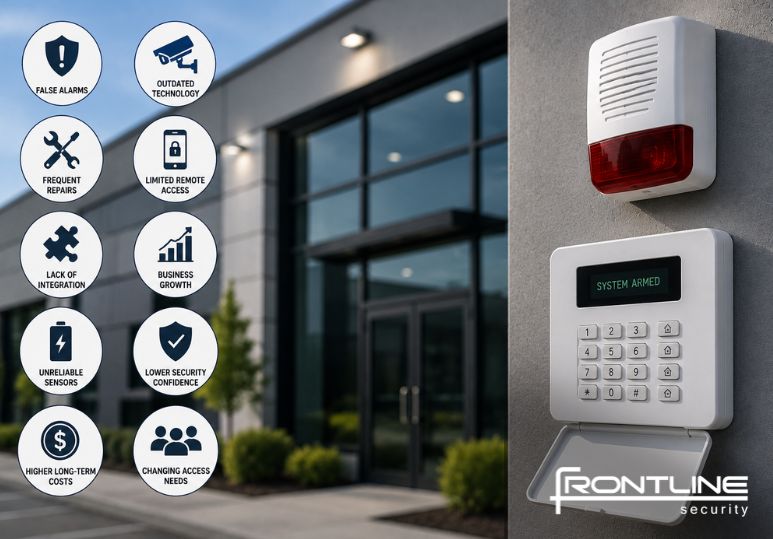
An aging or unreliable alarm system can create security gaps that leave property, inventory, equipment, and employees more vulnerable. Commercial alarm systems should provide dependable detection, communication, and monitoring, but technology and business security requirements change over time. A system that worked well several years ago may no longer provide the coverage or features a growing organization requires. Frequent false alarms, unreliable sensors, limited remote access, and recurring repairs are just some of the warning signs that an upgrade may be worth considering. Modern commercial security systems can provide stronger connectivity, professional monitoring, remote management, and integration with cameras or access control. Recognizing problems early allows businesses to address weaknesses before equipment fails during an actual security event. Professional assessment and commercial alarm installation can help determine whether individual components should be updated or whether replacing the existing system offers better long-term protection.
PERFORMANCE PROBLEMS THAT SIGNAL AN UPGRADE
Alarm systems are expected to operate reliably every day, particularly when employees leave and a building becomes more vulnerable. When an existing system begins experiencing recurring problems, those issues should not be ignored. Older commercial alarm systems can gradually become less dependable as sensors, control panels, batteries, communication equipment, and other components age.
1. Frequent False Alarms
Occasional false alarms can happen, but frequent activations may indicate a problem with sensors, equipment placement, wiring, or system configuration. Repeated false alarms can frustrate employees and make genuine alerts easier to dismiss. If technicians are continually repairing the same problems, replacing outdated equipment may provide a more dependable solution.
2. Sensors Are Becoming Unreliable
Door contacts, motion detectors, glass-break sensors, and other detection devices are essential parts of business alarm systems. Sensors that fail to activate, disconnect unexpectedly, or generate inconsistent readings can create areas of the property that are not properly protected. Aging detection equipment should be assessed before reliability declines further.
3. Repairs Are Becoming More Frequent
A system requiring regular service calls can become expensive to maintain. Individual repairs may initially seem more affordable than replacement, but repeated labour and component costs can add up. Older parts may also become difficult to source as manufacturers discontinue legacy equipment.
Warning signs related to performance include:
- False alarms
- Failed sensors
- Battery issues
- Connection problems
- Delayed notifications
- Repeated repairs
4. Communication Is Unreliable
Modern monitored commercial alarms depend on reliable communication between the protected property and monitoring services. If an older system frequently loses its connection or depends on outdated communication technology, security signals may not transmit as reliably as expected.
Backup communication options can provide additional protection when a primary connection becomes unavailable. Upgrading communication equipment may therefore be just as important as replacing sensors or control panels.
Businesses should not wait until an actual security event reveals that an alarm system has stopped performing properly. Regular testing and professional inspections can identify declining components early and provide an opportunity to plan upgrades before a complete failure occurs.
TECHNOLOGY AND SECURITY NEEDS HAVE CHANGED
A commercial alarm system can still function while no longer meeting the needs of the organization it protects. Businesses change over time, and security requirements often change with them. New employees, additional inventory, renovations, longer operating hours, or expanded facilities can all make an older system less appropriate.
5. Your Business Has Expanded
A security system originally designed for a small office or retail space may not provide enough coverage after an expansion. Additional entrances, storage areas, offices, warehouses, or restricted spaces can create new vulnerabilities.
Modern commercial security systems can often be expanded with additional sensors and security zones. A professional assessment can determine whether the existing platform can support these additions or whether replacement would provide better long-term scalability.
6. Your System Has No Remote Access
Remote management has become an important feature for many businesses. Newer commercial alarm systems may allow authorized users to arm or disarm the system, receive alerts, review activity, and check system status remotely.
Without these capabilities, managers may have limited visibility when they are away from the property. Remote access can be particularly useful for organizations with multiple locations, extended hours, or managers who frequently travel.
7. Your Alarm Cannot Integrate With Other Security
Modern security strategies often combine multiple technologies. Alarm systems can work alongside:
- Cameras
- Access
- Intercoms
- Monitoring
- Analytics
- Automation
If an older alarm system cannot integrate with surveillance cameras or access control, businesses may be managing several disconnected platforms. Integrated commercial security systems can make security easier to oversee and provide more information when an incident occurs.
8. Employee Access Is Difficult to Manage
Changes in staffing can create challenges when an older system relies on limited codes or traditional keys. Modern systems can provide individual credentials and improved access management, making it easier to update permissions as employees join, leave, or change roles.
Security technology should support the way a business operates rather than creating unnecessary administrative work. If the existing system cannot adapt to changing operational requirements, an upgrade may provide both stronger protection and easier day-to-day management.
WHEN REPLACEMENT OFFERS BETTER LONG-TERM VALUE
Not every alarm problem requires complete replacement. Sometimes a new sensor, battery, communication module, or software update can extend the useful life of an existing system. However, there comes a point when continuing to invest in outdated equipment provides less value than installing a modern solution.
9. The System Is Difficult to Maintain
Legacy equipment can become increasingly difficult to support. Manufacturers may stop producing replacement components, software may no longer receive updates, and technicians may have fewer options for repairing outdated technology.
When maintaining business alarm systems becomes difficult or expensive, replacement can provide greater reliability and predictable long-term support. Newer equipment can also make future expansion easier because businesses are working with technology designed to accommodate current security requirements.
10. You Are No Longer Confident in Your Security
One of the clearest warning signs is simply losing confidence in the system. Business owners should not have to wonder whether an alarm will activate properly, whether monitoring will receive a signal, or whether important areas of the property are actually covered.
A professional security assessment can identify:
- Blind spots
- Aging equipment
- Weak coverage
- Outdated technology
- Integration limitations
- Communication concerns
Professional commercial alarm installation begins with understanding the property and its risks. Instead of simply replacing old equipment with newer versions of the same devices, an installer can evaluate entrances, operating hours, employee access, inventory, restricted areas, and after-hours vulnerabilities.
This provides an opportunity to design commercial alarm systems around current needs rather than relying on a system created for how the business operated years ago.
Businesses should also consider future requirements when replacing equipment. A scalable system can accommodate additional sensors, cameras, access-controlled doors, or new locations as the organization grows. Planning for expansion can help avoid another complete replacement when security requirements change again.
Professional monitoring may also become part of the upgrade strategy. Monitored commercial alarms provide continuous oversight so alarm events can be addressed even when owners or employees are unavailable. This can be particularly valuable overnight, on weekends, and during holidays when commercial properties are often empty.
Ultimately, replacing an alarm system should be based on performance, reliability, compatibility, and the changing needs of the organization rather than age alone. If recurring problems, outdated technology, or limited coverage are creating security concerns, a new system may offer better long-term value.
Modern commercial security systems can provide more reliable detection, stronger communication, easier management, and greater flexibility. Addressing warning signs early allows businesses to plan an upgrade strategically instead of being forced to replace equipment after a failure. With the right system design and professional installation, businesses can maintain dependable protection while creating a security foundation that adapts as operations continue to evolve.
FAQs
Frequent false alarms, unreliable sensors, repeated repairs, communication failures, limited integration, and difficulty expanding the system can all indicate that replacement should be considered.
Yes. Some systems can be improved with newer sensors, communication equipment, monitoring, cameras, or access control. A professional assessment can determine whether upgrading individual components or replacing the system is more practical.
Professional installation helps ensure equipment is positioned correctly, security vulnerabilities are addressed, and the system is configured to provide reliable coverage for the property's current and future needs.
Get the Peace of Mind You Deserve
You’ve worked hard to build your business or buy your home. Now it’s time to protect them properly and give yourself the peace of mind you deserve. Our full-service security solutions can give whatever matters most to you the 360° protection it needs. Contact us today by calling (403) 291-9311 or by filling out the form below and put us on your frontline.